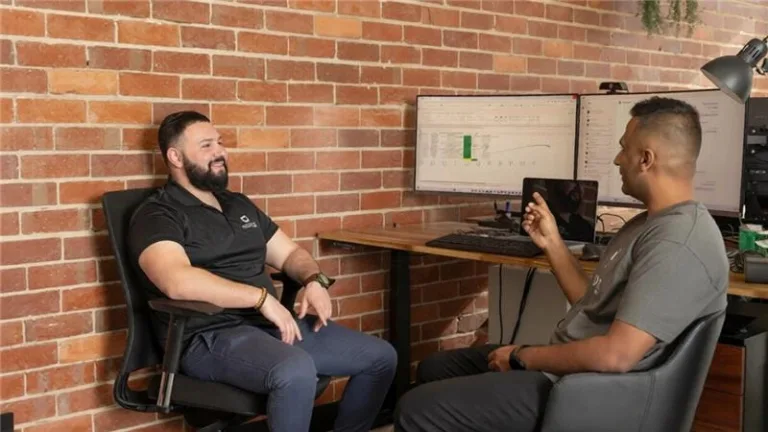
If you’ve got one IT person holding the whole business together, you know exactly what the pressure looks like. Tickets piling up, no one covering evenings or weekends, and zero time for anything that isn’t urgent. Full outsourcing isn’t always the answer, especially when your organisation values the institutional knowledge your in-house team has built. Co-managed IT services offer something different: a collaborative support model where an external MSP works alongside your internal IT team, filling the gaps without taking over. For Melbourne businesses navigating growth, compliance demands, and an increasingly complex cyber threat landscape, this model is worth understanding properly.
What Is Co-Managed IT? A Support Model Built Around Your Internal IT Team
Co-managed IT services are a shared support model where a managed service provider works alongside your existing internal team rather than replacing them. Unlike fully managed IT, where an MSP takes over all IT functions, co-managed IT is designed to complement what your in-house team already does well.
Think of it as bringing in reinforcements, not a replacement. Your internal IT leadership stays in control of day-to-day decisions, vendor relationships, and institutional knowledge. The MSP steps in for the areas where you need depth, scale, or around-the-clock coverage. It’s a support model where an external partner extends your capacity without disrupting the culture or knowledge your team has built.
This is particularly relevant for Melbourne businesses that sit somewhere in the middle: too large to operate without dedicated IT, but not yet at the scale where fully managed outsourcing makes sense.
Signs Your Internal IT Team Needs Support (Without Losing Control)
Co-managed services are designed for organisations that can already function in-house but are starting to show cracks under the pressure. Here are the common signals:
- The ticket backlog is growing, and routine issues are getting deprioritised because your team is constantly firefighting
- No after-hours or weekend coverage, meaning any incident outside business hours becomes a problem on Monday morning
- Lacking cybersecurity depth — your team can handle day-to-day issues, but isn’t equipped for threat detection, SOC monitoring, or incident response
- Cloud migrations are stalling because there’s no one with the bandwidth or specialist skills to lead the project
- No time for strategic IT initiatives, because the team is consumed by support tasks and daily operations
- Single point of failure risk, where one person’s resignation or sick day could bring your IT support to a halt
- Risk of burnout is real: about 60% of IT staff in overstretched environments report burnout symptoms when forced to cover complex specialties without adequate support
Sound familiar? You’re not alone. Australia needs 312,000 additional tech workers by 2030, and the skills gaps hit hardest in cybersecurity and cloud, the exact areas most stretched thin internal IT teams are trying to cover. An estimated 54,000 more skilled people in cyber security operations and management will be needed across Australia by 2030, according to the ACS 2025 Digital Pulse report.
What Co-Managed IT Support Typically Covers?
Co-managed IT support strengthens your internal team by taking on the functions that fall outside your day-to-day capacity. Here’s what a typical engagement looks like:
| Responsibility | Internal IT Team | Co-Managed IT Partner (Telco ICT) |
| Day-to-day user support | ✅ Primary | ✅ Overflow and after-hours |
| Cybersecurity monitoring | ⚠️ Limited | ✅ SOC/EDR/threat detection |
| Microsoft 365 administration | ✅ Primary | ✅ Advanced configuration and support |
| Cloud migrations and infrastructure upgrades | ⚠️ Limited capacity | ✅ Project-based delivery |
| Strategic IT advisory (vCIO) | ❌ Typically absent | ✅ Included |
| After-hours help desk | ❌ Usually not covered | ✅ Covered |
| Compliance and audit support | ⚠️ Ad hoc | ✅ Structured and proactive |
| Disaster recovery planning | ⚠️ Basic | ✅ Tested and documented |
Key service areas in a co-managed engagement:
- After-hours helpdesk overflow: Your team works nine to five. Incidents don’t. A co-managed IT partner provides consistent support outside business hours, so users are never left waiting until Monday.
- Cyber security monitoring and response: With the Office of the Australian Information Commissioner confirming 1,113 data breaches in Australia in 2024, a 25% rise in a single year, cyber security can’t be an afterthought. Co-managed IT services provide access to SOC monitoring, endpoint detection and response (EDR), and proactive threat detection that your in-house team may not have the tools or skills to deliver. Telco ICT’s approach to managed cybersecurity is outlined in our MSSP guide.
- Microsoft 365 and cloud services administration: From licence management to advanced security configuration, cloud services support is a common gap for in-house teams. See how managed cloud services fill this role.
- Cloud migrations and infrastructure upgrades: Project-based support for workloads your internal team doesn’t have the capacity to lead. More on how Telco ICT approaches cloud migration.
- vCIO advisory: Strategic guidance aligned to your business goals, including compliance mapping, IT budgeting, and roadmap development. Learn more about what a vCIO does and whether your Melbourne business needs one.
- Disaster recovery and business continuity: A tested disaster recovery plan is a compliance requirement in many industries and a basic risk management measure in all of them.
The Business Case for Co-Managed IT in Melbourne
The Melbourne labour market makes this conversation very practical. An average IT employee in Melbourne, Australia, commands a salary of A$115,000–125,000 per year, plus training and onboarding costs. Hiring a second IT specialist, particularly one with cybersecurity or cloud depth, adds significantly to that. And that’s before you account for leave entitlements, recruitment fees, and the time it takes to onboard someone effectively.
Co-managed IT services let your organisation access a full team of specialists, including cyber security engineers, cloud architects, and helpdesk technicians, for a scalable monthly engagement. You pay for what you need, and you can scale up or down as the business grows or changes.
Beyond cost, there’s the risk argument. A single-person IT function is a genuine vulnerability. If your sole IT person resigns, falls ill, or takes annual leave, who covers? A co-managed IT support arrangement eliminates that single point of failure and gives the business consistent support regardless of what happens internally.
For Melbourne businesses in regulated industries (healthcare, finance, legal, or professional services), the compliance angle matters too. 93% of Australian respondents in Aon’s 2025 Global Risk Management Survey report having structured review processes for cyber risk, with cyber attacks and data breaches ranked as the leading business risk. Maintaining compliance obligations through a proactive, structured managed IT support arrangement is far more defensible than relying on an overstretched in-house team doing their best.
Read more on the cost of managed IT services and what goes into a monthly engagement for Melbourne businesses.
How Co-Managed IT Works at Telco ICT Group: Collaborative, Not a Takeover
At Telco ICT Group, co-managed IT support is built around genuine collaboration with your internal IT team. Here’s how the process typically unfolds:
- Discovery and audit: We start by understanding your current environment, your team’s strengths, and where the gaps are. This isn’t a sales pitch; it’s a genuine technical assessment.
- Toolset integration: Where possible, we work within your existing tools. Where there are gaps, we introduce our own platforms in a way that’s transparent and fully accessible to your team.
- Defined responsibilities: We agree on a clear split of responsibilities. Your internal staff retain ownership of the areas they manage well. We step in for overflow, specialist support, and after-hours coverage.
- Escalation paths: Every engagement has a documented escalation process, so your team knows exactly when and how to loop us in.
- Ongoing communication: Regular check-ins, reporting, and a dedicated account manager ensure we stay aligned with your business outcomes and your internal departments.
This is a support model where an external provider works alongside internal staff, not over them. Your internal IT leadership stays in the driver’s seat. We’re here to support your internal team, not to sideline them.
For context on how Melbourne businesses benefit from this kind of proactive managed IT support, see our overview of managed IT services in Melbourne and the 8 key benefits of engaging an MSP.
Is Co-Managed IT the Right Co-Managed IT Solution for Your Organisation?
Not every business needs co-managed IT, but for a specific type of organisation, it’s the right fit. Here’s a quick checklist:
- ✅ You have between one and five internal IT staff
- ✅ Your business is growing, and IT complexity is increasing faster than your team can keep up
- ✅ You need after-hours coverage, specialist cyber security support, or project-based delivery
- ✅ You want to retain your internal IT culture, institutional knowledge, and staff relationships
- ✅ You’ve considered fully managed IT but aren’t ready to outsource everything
- ✅ Compliance, audit readiness, or disaster recovery gaps have been flagged as risks
If most of these apply, it’s worth exploring a co-managed IT partner before those gaps become incidents. You can also explore the top managed IT services companies in Melbourne to understand the broader landscape.
Ready to strengthen your internal IT team without replacing them? Book a free consultation with Telco ICT Group to explore co-managed IT services Melbourne businesses trust.
FAQs
What is the difference between co-managed IT and fully managed IT services?
Co-managed IT is a shared support model where an MSP works alongside your existing internal IT team, covering gaps in capacity, skills, or hours. Fully managed IT means the MSP takes over all IT functions entirely. Co-managed IT for organisations that want to retain in-house expertise while accessing external support.
Will a co-managed IT provider replace our internal IT staff?
No. The whole point of co-managed IT services is to support your internal team, not replace them. Your staff retain their roles and responsibilities. The MSP fills gaps and handles workload overflow.
How does billing work for co-managed IT?
Most co-managed IT engagements use a fixed monthly fee based on the scope of services agreed. This gives your organisation predictable IT costs without the variable expenses of break-fix support.
Can co-managed IT help us with cybersecurity we can’t handle internally?
Yes, and this is one of the most common reasons Melbourne businesses explore co-managed IT. Many internal IT teams lack the tools, time, or specialist depth for continuous cybersecurity monitoring. A co-managed IT partner can provide SOC monitoring, EDR, compliance support, and incident response. See how Telco ICT approaches cybersecurity trends for 2026.
How do we get started with co-managed IT from Telco ICT?
Book a free consultation with our team. We’ll assess your current environment, discuss your business goals, and recommend a support model that fits your organisation without disrupting what’s already working.
Table of contents
Related Posts

We’ll handle the tech
so you can get on with
running your business.