
The VoIP phone system for small businesses is becoming increasingly popular, and it’s easy to see why.
The global market for this technology is expected to grow by approximately $20 billion between 2021 and 2026, reflecting a significant shift in the way businesses communicate. A key factor driving this growth is the COVID-19 pandemic, which accelerated the adoption of remote work practices.
As businesses adapted to new working conditions, a reliable small business-hosted VoIP phone system that could ensure smooth communication across distances and provide robust security became essential.
The appeal of VoIP (Voice over Internet Protocol) systems goes beyond just cost savings. VoIP offers an opportunity for small businesses to upgrade their communication tools, creating a more flexible, accessible, and scalable infrastructure that supports growth and modern work practices.
This technology also aligns with the trend toward digital transformation, where businesses are increasingly looking for solutions that integrate seamlessly with their evolving needs.
What is VoIP and How Does It Work?
VoIP stands for Voice over Internet Protocol, a technology that allows voice communication over the internet rather than traditional phone lines. It works by converting sound into digital packets, which are transmitted through a broadband internet connection. When these packets reach their destination, they are reassembled into sound, allowing people on either end to communicate as they would over a regular phone line.
For small businesses, VoIP technology offers the ability to make and receive calls anywhere there’s a reliable internet connection. This eliminates the need for expensive landlines or specialised infrastructure. Instead, businesses can integrate their phone systems with existing broadband connections, making it a cost-effective solution that can scale as needed. A small business VoIP phone system enhances service quality, allowing businesses to offer faster response times and more efficient customer service.
You might be wondering how you are able to connect with anyone anywhere in the world. Well, the mechanism is quite simple, and we’ll break it down for you.
To get a better understanding of how VoIP operates, let’s look at what transpires during a call on a VoIP phone:

When you place a VoIP call, the VoIP adaptor converts the analog audio signal into a digital signal

Following a transmission through your internet to the business phone service provider, the message is subsequently sent to your customer’s phone.
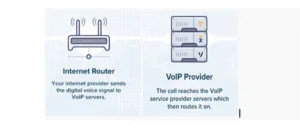
Due to the virtually instantaneous nature of this procedure, VoIP conversations occasionally have sound quality that surpasses traditional phone calls.

How is VoIP different from a Traditional Phone System?
The primary difference between VoIP phone systems and traditional phone systems lies in the technology used to route calls. Traditional phone systems operate on circuit-switching technology, which involves establishing a dedicated connection for each call. This system, while reliable, can be expensive due to the need for physical phone lines and associated maintenance costs.
In contrast, VoIP operates on packet-switching technology. Calls are broken down into data packets that are sent over the Internet when necessary. This approach not only reduces costs but also improves efficiency, offering features like call routing and voicemail to email that are not available with traditional systems. Small business VoIP Melbourne providers offer better sound quality and fewer dropped calls, provided you have a stable internet connection.
How to Make a Call Using VoIP
You first need a VoIP business phone service in order to make a VoIP call. Additionally, you need a strong internet connection. Typically, this entails connecting to a broadband internet connection.
After that, you may now use any of the following devices to make a VoIP call:
1. Your smartphone: Once more, you’ll require the proper app and a wifi connection. A mobile data plan with 4G or faster speeds is also an option. Most VoIP applications are compatible with all smartphones, including Apple iPhones (iOS) and Android smartphones.
2. A unique IP phone: It functions and appears like a typical phone. It has a button-equipped handset that fits into a charging cradle. The IP phone, however, uses an RJ-45 connector rather than an RJ-11 phone connector. This indicates that it connects to your router’s Ethernet port rather than a phone connector. You might receive a free phone handset from some VoIP providers, depending on the time of year.
3. Your current handset: An ATA (analog telephone adapter) can be used to connect this to the VoIP system, giving it an IP address. In essence, you simply connect your phone to the ATA rather than directly to your power socket.
4. Your laptop: An app that enables VoIP calling is required. Softphone is another name for this. Of course, a sound card, a headset, or a microphone and speakers are also necessary. Additionally, you will want Ethernet or wifi for internet connectivity. The majority of well-known VoIP providers have Windows and Mac apps.
Top Benefits of VoIP for Small Businesses
Adopting a VoIP phone system for small businesses offers a range of significant benefits. Here are nine key reasons why VoIP should be at the top of your list:
1. Cost Savings
One of the most compelling reasons small businesses opt for VoIP is the potential for substantial cost savings.
Unlike traditional phone systems, which often involve costly installation and maintenance fees, VoIP systems use existing internet connections, which eliminates the need for dedicated phone lines. The setup process is quick and affordable, making it possible to significantly reduce monthly phone bills.
Many businesses report saving up to 50% on their phone services after switching to VoIP.
2. Improved Call Quality
A small business’s hosted VoIP phone system does not sacrifice call quality despite being more affordable.
With a fast, reliable internet connection, VoIP calls typically offer clearer voice quality with fewer interruptions or dropped calls than traditional phone systems.
For small businesses, maintaining professional communication with clients and partners is critical, and VoIP ensures that every conversation is crisp and clear.
3. Enhanced Security
Security is a growing concern in today’s digital landscape, and VoIP technology offers built-in features to address this challenge.
VoIP systems provide encrypted calls, advanced identity management, and real-time notifications for suspicious activities. These features help prevent common threats like fraud, spam calls, and data breaches.
Additionally, VoIP systems can easily be updated with new security protocols as threats evolve, ensuring your business is always protected.
4. Greater Accessibility
One of the most significant advantages of VoIP is the ability to access your business phone number from anywhere with an internet connection.
This is especially beneficial for small businesses with remote employees or teams working from multiple locations. No longer do team members need to be tied to a physical office or landline to stay connected.
VoIP ensures you can communicate effectively with clients and colleagues, whether you’re working from home, at a café, or on the move.
5. Scalability
As your business grows, so should your communication system. A VoIP phone system for small businesses offers scalability that traditional phone systems cannot match. In case you’re hiring new employees, opening additional locations, or adding more departments, you can easily scale your VoIP system to meet your needs.
Adding new lines or moving existing ones is simple and cost-effective, making VoIP an ideal solution for businesses with expanding requirements.
6. Multitasking Capabilities
VoIP allows you to do much more than just make voice calls. You can share files, images, and videos during calls without disrupting the conversation.
This feature is incredibly valuable for teams that need to exchange information quickly and efficiently, especially in meetings or client calls where visual elements or documents need to be shared in real time.
7. Compatibility with Modern Devices
VoIP systems are designed to work with a variety of modern devices, including smartphones, laptops, headsets, and IP phones. This compatibility makes it easy to integrate VoIP into your existing technology infrastructure, without the need to replace equipment or worry about outdated technology.
As your business upgrades its devices over time, your VoIP system will seamlessly work with the latest gadgets.
8. Advanced Features
Small business VoIP Melbourne solutions come equipped with a variety of advanced features that can streamline your operations. For example:
- Auto-attendant: This virtual receptionist can direct calls to the appropriate department or team member, reducing the need for live operators.
- Call forwarding: If you’re unavailable, calls can be automatically forwarded to another number or voicemail, ensuring you never miss an important call.
- 3-digit dialling: A quick way to reach frequently dialled numbers, improving efficiency in the office.
These features can enhance customer experience, improve internal communication, and help your business operate more smoothly.
9. Increased Efficiency
VoIP centralises your business communications on one platform, streamlining your workflow and coordination. Employees can easily transfer calls, access voicemail, and collaborate on calls regardless of their location.
This centralisation fosters better communication between team members and improves overall business efficiency.
Is VoIP the Right Choice for Your Business?
VoIP phone systems for Small businesses are great, and they come with many useful benefits. VoIP has superior voice quality, advanced security systems, a scalable nature, and a cost-effective price. All these options make VoIP an ideal choice for startups and small businesses.
Small businesses operate under a tight budget but need all these functionalities to grow faster. Moreover, a wide range of compatibility, multitasking, and added features are the cherry on top of the cake.
If you’re thinking about upgrading to VoIP, it’s important to evaluate your business’s specific needs. A hosted VoIP phone system could really help streamline communications, improve customer satisfaction, and foster growth.
Plus, considering all the benefits, cost savings, flexibility, and scalability, VoIP could be just what your business needs to stay ahead in today’s competitive market.
So, what are you waiting for? Take your business communications to the next level with VoIP!
Frequently Asked Questions
- Can I keep my current business phone number?
Yes, most providers offer “number porting,” which allows you to move your existing landline or mobile number to your new VoIP service. It’s a good idea to confirm if your provider charges a one-time fee for this service.
- What happens if my internet connection goes down?
Modern VoIP systems are designed for reliability with automatic failover. If your office internet fails, you can instantly route calls to mobile apps on smartphones or to an alternative backup number to ensure you never miss a client.
- Do I need to buy expensive hardware to use VoIP?
Not necessarily. While you can use specialised IP phones, many businesses save money by using “softphones”, apps that turn your existing laptops, tablets, or smartphones into business extensions.
- How much internet speed do I actually need for clear calls?
VoIP is very efficient; a single high-quality voice call typically requires only about 100 Kbps of bandwidth. For most small offices, a standard high-speed broadband connection is more than enough to handle multiple simultaneous HD calls.
- Is VoIP secure for sensitive business conversations?
Yes, reputable VoIP providers use advanced encryption and secure protocols (like Secure SIP) to protect your data. To maximize security, you should always use strong passwords and keep your system’s software updated.
Table of contents
Related Posts

We’ll handle the tech
so you can get on with
running your business.