Phone System
PBX Phone Systems: The Complete Guide for Australian Businesses in 2026


Clear and direct communication is at the heart of every successful business. When a client has a question or a concern, the last thing they want is to wait for an email response or dig through a maze of chatbots. They want to speak to a real person, quickly and without hassle. That is why having the right phone system in place is not just a convenience; it is a competitive advantage.
For many Australian businesses, PBX phone systems are the engine behind that smooth, professional communication experience. Short for Private Branch Exchange, a PBX system routes incoming and outgoing calls within your organisation, ensuring that every call reaches the right person, department, or extension. It keeps your team connected, and your clients reassured that they are in good hands.
In this guide, we will walk through what PBX phone systems actually are, how they work, and why they remain a vital part of business communications in 2025, even in an era dominated by emails and instant messages. We will also explore how platforms like 3CX are reshaping traditional PBX systems into powerful, modern solutions that are scalable, cost-effective, and surprisingly easy to manage.
What are PBX Phone Systems?
A PBX phone system, or Private Branch Exchange, is essentially a private telephone network used by businesses to manage both incoming and outgoing calls. It acts as the internal communications hub, routing calls efficiently between departments and employees while also connecting your business to the outside world.
One of the key advancements of modern PBX systems is their ability to connect internal phones directly, removing the need for an old-fashioned switchboard or operator. This marks a significant leap from early business phone setups like Key Telephone Systems (KTS), which relied heavily on manual intervention to transfer calls or connect lines.
Today’s PBX systems are far more flexible and sophisticated. They support SIP (Session Initiation Protocol) and IP-based phones, commonly referred to as VoIP systems, allowing voice calls to travel over the internet rather than traditional phone lines. This makes communication faster, more scalable, and more cost-effective. If you are comparing options, our guide on the difference between VoIP and Unified Communications is a helpful starting point.
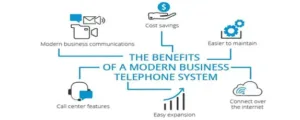
With a PBX phone system in place, businesses can easily scale their communications by adding phone lines as needed and enabling internal calls at no additional cost. Features like call forwarding, voicemail, call recording, interactive voice response (IVR) menus, and call queues are often built-in, giving businesses of any size access to tools once reserved for large enterprises.
In short, a PBX phone system centralises your communications, improves call management, and adds a professional layer to every customer interaction. To understand what this looks like in a real-world setting, explore our range of business phone systems.
Components of a PBX Phone System Network
To enable voice connectivity, a full PBX phone system network is made up of several hardware and software components. At least three components should be included in your corporate phone system, regardless of whether you are using a hardware solution or a cloud-based PBX:
1. Telephone Lines (Trunks):
These are the channels that connect your PBX to the outside world. They can take the form of traditional landlines (like PSTN or ISDN) or virtual lines such as SIP trunks, which use the internet to handle voice calls. Virtual trunks are common in VoIP-based PBX phone systems and are typically provided by telecom operators or Internet Telephony Service Providers (ITSPs).
2. The PBX (Private Branch Exchange) itself:
This is the core of your phone system. It routes calls, manages internal extensions, and handles features like call transfers, voicemail, and auto-attendants. Depending on your setup, the PBX might be a physical piece of equipment on your premises or a virtual system hosted in the cloud. Platforms like the 3CX phone system and the IPECS phone system are both excellent examples of how modern PBX technology can be deployed.
3. Telephone Terminals:
These are the actual endpoints your team uses to make and receive calls. They can include traditional analog phones, IP phones, or software-based phones (softphones) that run on laptops or mobile devices and let users place calls over the internet.
In addition to these key components, many PBX phone systems also require supporting equipment like routers and VoIP gateways to ensure smooth connectivity and call quality, especially if you are integrating older analog devices or connecting across multiple locations. Our ICT consulting services team can assess your existing setup and recommend the right components for your needs.
Altogether, these components create a reliable and flexible communications system that helps your team stay productive, and your business remain accessible.
Types of PBX Phone Systems
When choosing a PBX phone system, it helps to understand the different types available, each offering distinct benefits depending on your business size, goals, and technology setup.
Traditional on-premises PBX systems are physically installed at your business location and give you full control over your call infrastructure. They are ideal for companies that prefer in-house management and have the IT resources to maintain hardware.
Hosted PBX systems, also known as cloud-based PBX, shift the heavy lifting to a service provider. These are excellent for businesses that want flexibility, easier scalability, and lower upfront costs.
Then there is the hybrid PBX system, which combines elements of both, offering the reliability of on-site equipment with the convenience of cloud-based features. This setup is perfect for businesses in transition or those that need a blend of both worlds.
Choosing the right type of PBX phone system can directly impact how smoothly your team communicates and how easy it is to grow your setup over time. Our team at Telco ICT Group can help you identify the best fit. You can also explore our dedicated office phone system page for more details.
Here is a breakdown of the three main deployment options:
1. Hosted PBX
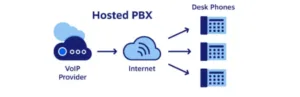
A hosted PBX phone system, also known as an IP PBX, cloud PBX, or virtual PBX, is a modern solution that integrates all your communication needs into a single platform. It connects and routes both internal and external lines, providing a centralised system for your business.
One of the key benefits of a hosted PBX is the ability to manage employee phones through a simple web interface, giving you complete control from anywhere. Because the system is hosted in the cloud, it can be accessed from any device with an internet connection, including a PC, smartphone, or IP phone. This flexibility makes it an ideal solution for businesses, especially those with remote teams or employees on the move.
Contemporary PBX phone systems, like hosted PBX, offer a wide range of features that traditional landline systems cannot match. You can customise settings such as call forwarding, auto attendants, voicemail transcription, and call routing, all via an intuitive online dashboard. Additional features like call recording, hold music, and interactive voice response (IVR) are also available.
For businesses that rely on multiple communication channels, a VoIP PBX can handle large conference calls, route incoming calls to mobile phones, and integrate with SMS or video conferencing tools. It can also be connected to your company’s CRM software, enhancing the way you interact with customers. Our cloud collaboration services and Microsoft Office 365 services pair naturally with a hosted PBX to create a fully unified communications environment.
One of the standout advantages of a hosted PBX is its cost-effectiveness compared to on-premises systems. There is no need to invest in expensive hardware or maintain complex infrastructure. Hosted PBX providers typically charge a monthly per-user fee that covers minutes, features, and support. Some also offer metered plans based on usage, making it easier to manage costs while still enjoying the benefits of advanced communication technology.
Benefits of Hosted PBX Phone Systems:
If you are looking for a PBX phone system for a growing business, a hosted PBX could be the perfect solution. Here is why:
- Plug-and-play setup: You can get your system up and running quickly without complicated installations.
- Scalability: As your business grows, you can easily add new users and features without hassle.
- Support for mobile and on-site employees: No matter where your team is, hosted PBX ensures seamless communication between everyone.
Built-in collaboration tools: Features like instant messaging, screen sharing, and video conferencing make teamwork effortless. - No need for dedicated IT staff or equipment: Everything is hosted in the cloud, so there is no need to invest in costly hardware or dedicated IT personnel. If you do need IT support, our managed IT services are available to help.
- Simple maintenance: Keeping your system updated and running smoothly is straightforward, saving you time and effort.
- Advanced customer service features: Your support staff will have more control and flexibility to manage calls, making them more efficient.
- Third-party system integration: Hosted PBX systems can connect with tools like Microsoft Teams and your CRM. Our Microsoft Dynamics integration services make this process seamless.
- Perfect for small businesses: If you are a small business without the budget for traditional phone systems, hosted PBX offers a cost-effective, high-quality alternative.
A hosted PBX phone system is an ideal solution for businesses that need flexibility, efficiency, and affordability as they scale. Our 3CX phone system offering is one of the most popular hosted PBX solutions we deploy for Melbourne businesses.
2. On-premises PBX systems
An on-premises PBX is an internal communication system designed to manage both incoming and outgoing calls. It is a traditional solution that operates similarly to an automated switchboard, a technology that has been around for decades.
For an on-premises PBX system to function, each business phone needs to be physically wired and connected to on-site telecommunications equipment. As a result, the initial setup cost can be relatively high, with each line costing around $1,000, plus ongoing maintenance and consulting fees. These costs can quickly add up, especially for larger organisations.
Once the go-to solution, on-premises PBX phone systems are now often seen as limited and too costly for many businesses. As technology advances, traditional landlines on which PBX systems were originally built are becoming less relevant. Modern business phone systems now offer far more advanced features and functionality than older PBX systems could provide.
Benefits of an On-premises PBX phone system:
While on-premises systems may be outdated for many, they still carry some advantages:
- Low operating costs: With no recurring monthly fees, your business can manage costs more predictably.
- Control over the equipment: Owning the physical hardware gives you more authority over the system’s performance and upkeep.
- Direct relationship with your phone provider: There is no reliance on a third-party cloud provider for phone services.
- No subscription or licensing fees: Once installed, there are no ongoing licensing fees or subscriptions.
- Enhanced security control: With everything stored in-house, you have more direct control over security measures. That said, our firewall services can add a layer of protection regardless of which system you choose.
Though on-premises PBX systems may still make sense for some companies, it is clear they are becoming less practical as cloud-based alternatives continue to improve.
On-premises PBX systems also face significant security vulnerabilities. According to the FCC, phone scams often target businesses using legacy PBX systems, exploiting them to relay costly international calls. These systems are only as secure as the physical location they are housed in, making them susceptible to both cyber and physical threats.
As a business owner, it is crucial to ask: Is our on-premises PBX delivering the best value year after year, or are we spending too much managing and maintaining it? With systems that depreciate over time, the costs associated with maintaining, scaling, and configuring on-premises PBX systems can quickly become prohibitive.
Why Every Business Needs a PBX Phone System
A PBX phone system is primarily designed to manage both internal and external communications, acting as the backbone of a business’s telephone network. For small businesses, a simple office extension setup might meet basic communication needs. However, as companies grow, they often face significant communication challenges if they do not implement a more robust, organised PBX system.
Here are several key reasons to consider implementing PBX phone systems to improve your business communications:
-
Unified Communications
Integrating your PBX phone system with other communication technologies, such as email, chat, and video conferencing, creates a seamless experience for users. This unified approach streamlines communications and ensures consistency across multiple channels. Our cloud collaboration services and Office 365 services integrate directly with modern PBX platforms to create a truly unified environment.
-
Comprehensive Call Management
A PBX phone system simplifies call scheduling, routing, and overall management, both internally and externally. It ensures that calls are handled effectively, reducing manual labour and increasing operational efficiency.
-
Multi-Location Integration
With a PBX phone system, multiple office locations can be unified under one phone system, enhancing coordination and ensuring smooth communication across different sites. This is especially beneficial for companies with a distributed workforce. See how we helped a client achieve exactly this in our Burra Foods case study.
-
Cost Savings
VoIP-based PBX phone systems are more affordable than traditional phone lines since they only require an internet connection and eliminate the need for a separate voice infrastructure. This significantly reduces overall communication costs.
-
Flexible Communication Across Devices
Employees can make and receive calls from various devices, including desk phones, laptops, PCs, and mobile phones. This flexibility ensures that communication is uninterrupted, whether employees are in the office or working remotely.
-
Scalable Call Centre Capabilities
A PBX phone system supports the efficient management of large volumes of incoming and outgoing calls, directing them to the appropriate agents. This scalability is crucial for businesses that require reliable call centre operations.
-
Enhanced Security
Integrated encryption within PBX phone systems ensures that all communications are secure, protecting sensitive information and guaranteeing privacy for both the business and its customers. Pair your PBX with our managed firewall services for an even stronger security posture.
-
User Preference
According to Salesforce, 88% of consumers prefer calling businesses over other forms of communication. By adopting a PBX phone system, your company can meet customer expectations for timely, personalised service, improving customer satisfaction and loyalty.
PBX Phone Systems and Modern Business: What Has Changed in 2026?
The PBX landscape has shifted considerably in recent years. The ongoing rollout of NBN across Australia has accelerated the move away from legacy PSTN and ISDN lines, making cloud and VoIP-based PBX solutions the natural choice for most Melbourne businesses. Hybrid working has also fundamentally changed how phone systems need to operate. A system that only works in the office is no longer acceptable for most organisations.
Platforms like 3CX and the IPECS phone system have evolved to address exactly these demands, offering mobile apps, browser-based softphones, and deep integration with tools your team already uses daily. Whether you need the IPECS eMG100 for a smaller site or the IPECS UCP100 for a larger deployment, modern systems can scale to suit your requirements.
Choosing the Right PBX System for Your Business
When selecting a Private Branch Exchange (PBX) system for your company, it’s crucial to consider several key factors to ensure you choose the right solution for your unique needs. Here are some important aspects to focus on:
-
Your Infrastructure
Your existing infrastructure plays a significant role in determining which PBX phone system is best suited for your business. To get started, ask yourself these questions:
- Do you have an IT team on hand?
- Are they well-versed in telecommunications, such as SIP trunking?
- What telecom solution are you currently using?
- What legacy systems need to be integrated with your new phone system?
- Do you need to keep your existing phone numbers?
- Do you operate from multiple locations or just one?
Our ICT consulting services team can conduct a full infrastructure review and make recommendations tailored to your environment.
-
Your Size and Expected Growth
Is your business a small-to-medium enterprise (SME), or are you part of a larger organisation? Are you planning to expand or contract shortly? Consider whether you’ll need additional features like video conferencing, call forwarding, or mobile worker support, and how the number of lines you need might change over time. The communication needs of small businesses can be vastly different from those of larger companies, so it’s important to select a PBX phone system that will grow with your company over the next five years.
-
Your Financial Goals
Every service implementation involves costs, but the good news is that the right decision can help you manage expenses effectively. For example, with a hosted or on-premises VoIP PBX, adding and removing lines is typically simple and cost-free. In contrast, maintaining an analog setup could mean higher upfront costs for installation and additional charges for new lines. Be sure to align your choice with your budget while keeping long-term costs in mind.
-
Model of Operations
How does your company operate on a day-to-day basis? Do you have a large team of field employees who need access to communications on the go, or do most of your team members work in an office? Are your employees more traditional, or do they lean toward tech-forward solutions? Keep these operational factors in mind when choosing a PBX phone system. A good provider will guide you in selecting the system that best supports your team’s specific needs.
Conclusion
A reliable and efficient communication system is the backbone of any successful business, and a PBX phone system is one of the most powerful tools for managing that communication. With its ability to streamline both internal and external calls, enhance collaboration, and scale as your business grows, a PBX system is an investment that pays off. It offers flexibility, cost savings, and a wide range of features designed to meet the unique needs of your company.
Whether you are exploring a hosted solution like 3CX, a hardware-based option like the IPECS phone system, or simply need guidance on upgrading your current office phone system, Telco ICT Group is Melbourne’s leading PBX phone system supplier and can provide the expert guidance and solutions you need.
Contact us today to explore how the right PBX system can transform the way your business connects and grows.
Frequently Asked Questions
- What is a PBX system?
A PBX (Private Branch Exchange) is a private telephone network used within a business that allows internal communication between staff and manages external calls.
- What is the difference between a traditional PBX and a cloud PBX?
A traditional PBX uses on-site hardware, while a cloud PBX (hosted PBX) runs over the internet, typically with lower upfront costs and easier scalability.
- Do PBX systems still work with NBN?
Yes. Modern IP-PBX systems are fully compatible with NBN and can leverage VoIP for cost-effective calling.
- Can a PBX system support remote workers?
Yes. IP-PBX and cloud PBX systems allow remote staff to connect via softphone apps on their laptop or mobile, just as if they were in the office.
- How long does it take to set up a PBX system for a small business?
A basic setup can be completed within a day or two; larger or more customised deployments may take longer depending on site requirements.
Table of contents
Related Posts

We’ll handle the tech
so you can get on with
running your business.